

Amira van Weegen
Junior Marketing Manager
September 12, 2025
Boost Office Utilization: Effective Strategies for Optimal Space Usage
4 min.
Cost Trap of Vacancy: Inefficient Office Utilization
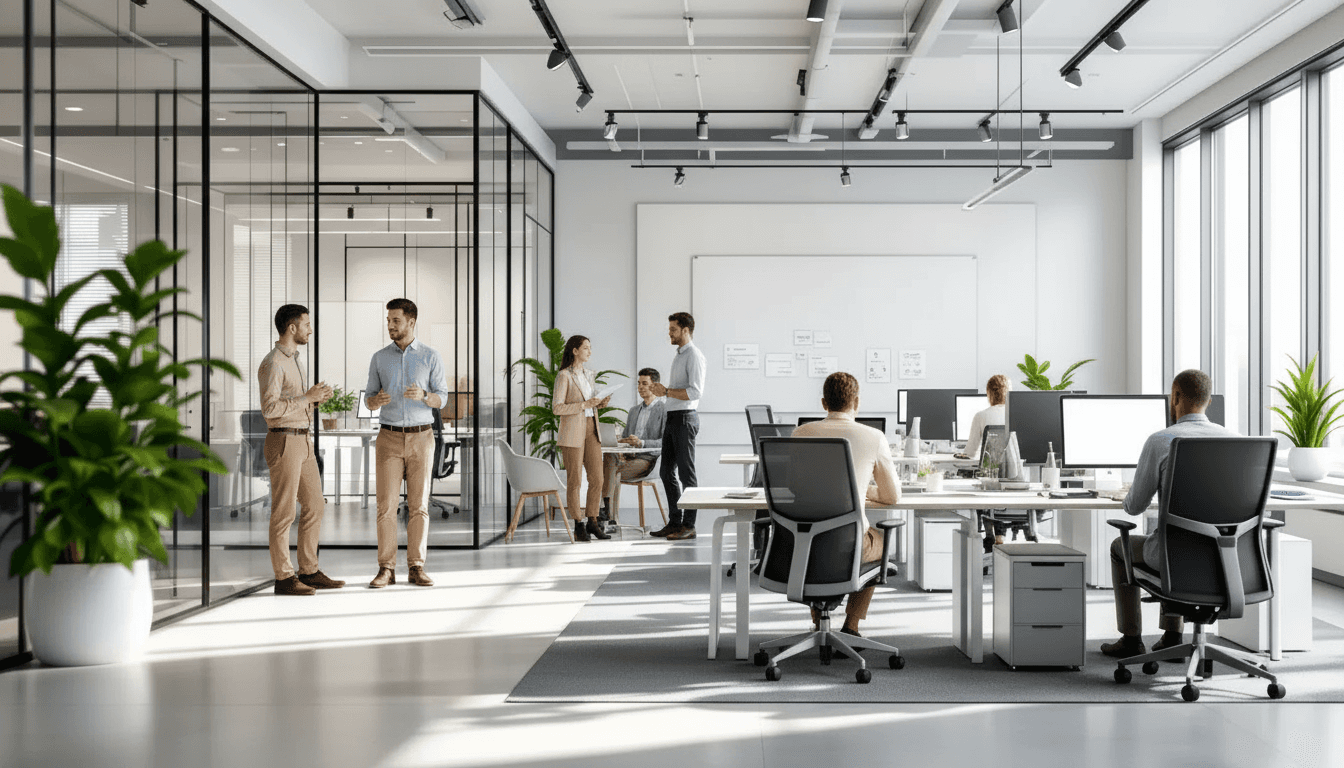
More than half of all leased office spaces in German companies remain unused on average. This alarming figure comes from a recent PwC study and highlights a massive potential for cost savings. Even during peak times, the average utilization rate reaches only 63%, a clear indication that traditional office concepts are no longer contemporary.
Reasons for low utilization:
Dedicated workstations often remain unoccupied because many employees work from home.
Lack of flexibility in workspace allocation leads to inefficient space usage.
Missing transparent data on actual usage complicates needs-based planning.
This situation clearly shows: The world of work has changed, and office space concepts need to be rethought. Only through innovative solutions can the potentials for office utilization be increased and employee satisfaction be enhanced at the same time.
The days when every employee was assigned a fixed workspace are over. Remote work and hybrid work have fundamentally changed the working world and posed new challenges for companies. At the same time, these developments offer enormous opportunities: Those who systematically increase their office utilization can not only achieve significant cost savings but also boost employee satisfaction and make an important contribution to sustainability goals.
Why Optimizing Office Utilization is Crucial
The economic impact of optimized office utilization is significant. Companies can considerably reduce their real estate costs through better space utilization while simultaneously enhancing workspace quality. Savings are derived not only from lower rental costs but also from reduced expenses for energy, cleaning, and maintenance.
Underutilized office spaces are more than just a cost factor. They tie up capital and incur ongoing expenses without offering real value to employees. Here lies enormous potential for improvement that many companies have yet to tap into.
Another crucial factor is employee satisfaction. Modern workers expect flexible working models and diverse work environments that meet their needs. Companies that offer suitable solutions here benefit not only from increased productivity but also from stronger employee retention.
Moreover, optimized office space utilization contributes to sustainability goals. Less energy consumption means a smaller CO₂ footprint, an aspect increasingly demanded by employees, customers, and partners alike.
Finally, flexible office utilization provides strategic advantages. Companies can respond more quickly to market changes and expand their teams as necessary without the immediate need to rent additional space.
Current Challenges in Office Utilization
The introduction of Hybrid Work has fundamentally changed the use of offices. Home office and remote work have become integral parts of the modern workplace, presenting businesses with new planning challenges.
Key issues in current office usage:
Insufficient use of designated desks: Employees who regularly work from home often still occupy a full desk, which remains unused on many days.
Lack of transparency: Without modern management systems, facility or office managers lack reliable data on when and how intensively spaces are actually used.
Imbalance in types of spaces: While large conference rooms frequently stand idle, there is simultaneously a lack of quiet workstations and smaller collaboration areas, a discrepancy that leads to frustration.
This development directly impacts economic efficiency: rising property costs meet declining space efficiency. Particularly in metropolitan regions, this increases the pressure to act and makes office utilization optimization an urgent necessity.
Strategies to Increase Office Utilization
Implementing Desk Sharing and Hot Desking
Introducing Desk Sharing is one of the most effective measures to boost office occupancy. Instead of the traditional 1:1 ratio between employees and workspaces, multiple people share a workspace flexibly.
Key success factors in implementation:
Create workspace zones:
Focus areas for concentrated work
Collaboration areas for teamwork
Phone booths for private conversations
Clean Desk Policy: At the end of the workday, workspaces are completely cleared to increase flexibility and usability.
Mobile storage solutions: Movable drawers or personal lockers secure personal items and promote acceptance.
Gradual introduction: Pilot projects in individual departments allow for experiences and gradual optimization before rolling out the system company-wide.
Developing Flexible Workspace Concepts
Activity Based Working goes beyond simple Desk Sharing and offers various zones for different activities:
Creative zones with flexible furniture foster innovation.
Quiet zones allow for focused individual work.
Multifunctional rooms can be reconfigured as needed (e.g., workshop in the morning, individual work in the afternoon).
Pop-up workspaces for temporary projects or visitors create additional flexibility.
Coworking areas within the company enhance cross-department collaboration.
Outdoor workspaces and terraces expand the options, especially during summer months, contributing to work-life balance.
Optimizing Hybrid Work Models
Hybrid models combine office and remote work, helping to make office occupancy more predictable.
Best Practices:
3-2 Model: Three days in the office, two days remote – a balanced solution for collaboration and focused work.
Core Days: Fixed office days (e.g., Tuesday to Thursday) provide planning security and maximize collaboration opportunities.
Flexible hours: Core working hours from 10:00 AM to 3:00 PM enable individual work rhythms, early and late hours distribute office presence.
Regular adjustments: Quarterly review of occupancy data allows for continuous optimization.
Department-specific regulations: Different teams have different presence needs – development may need more on-site days, administration can operate more flexibly.
Technology as the Key to Success
Modern software for workplace booking revolutionizes the management of flexible offices. Digital reservations via mobile apps and desktop applications make it easy for employees to book their desired workspace. The systems are intuitively usable and significantly reduce administrative effort.
Key features of such systems:
Real-time availability: Employees can immediately see which desks or meeting rooms are available and can book directly – preventing double bookings and frustration.
Calendar integration: Connection to Outlook or Google Calendar ensures that bookings automatically appear in personal calendars and suggest available times accordingly.
Automatic release for no-shows: Unused bookings are canceled after 15–30 minutes, making workplaces spontaneously available again.
Preference-based booking: Employees can save favorite spots or preferred equipment, which significantly enhances satisfaction and efficiency.
These features ensure transparency, optimal resource utilization, and higher acceptance in everyday work life.
Benefits for Businesses
The cost savings are one of the clearest benefits of flexible space usage: Companies can not only reduce rental costs through optimized office spaces, but also significantly cut expenses for energy, cleaning, and maintenance.
Sustainability greatly benefits from the fact that less utilized spaces lower the energy needs for heating, cooling, and lighting. Studies show that hybrid work models and desk sharing contribute to noticeably reducing the carbon footprint.
Employee satisfaction increases significantly with flexible workspace options. Many employees desire work models where they can choose the suitable workspace based on their task or mood, which is motivating and strengthens their loyalty to the company.
Another advantage: Demand-driven work environments support productivity. When employees can choose the location that best suits their tasks, everyday efficiency rises.
Flexibility is also strategically important. Companies that implement flexible office and workspace concepts are better prepared for workforce growth or reduction without the need to immediately lease new spaces.
anny - The intelligent solution for optimal office utilization
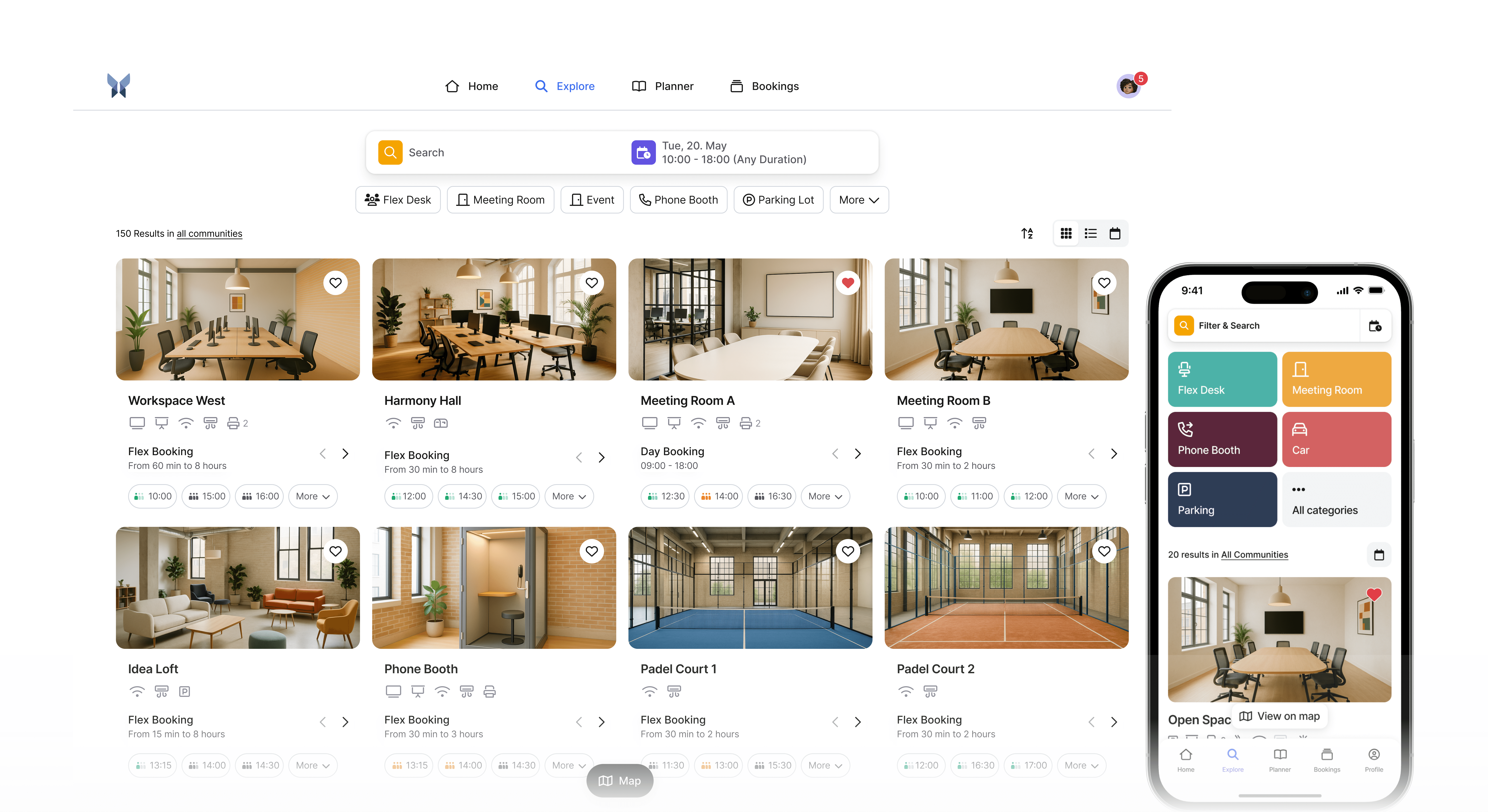
This is exactly where anny comes in. The software transforms rigid office structures into a flexible, user-friendly workplace and room management system that adapts to the needs of modern companies. Instead of having empty desks or occupied meeting rooms, anny ensures transparency and optimal utilization. Employees can book workspaces or meeting rooms easily via app or desktop, in real-time and across locations.
Especially convenient: anny integrates seamlessly into existing systems like MS Teams, Outlook, or Google Calendar, so no additional tools or complicated workflows are required. For companies, this means less administrative effort, clear structures, and valuable data on the actual use of office spaces.
But anny offers more than just booking functions. With intelligent analytics, patterns can be identified, space requirements realistically planned, and costs reduced in the long term. At the same time, employees benefit from greater satisfaction because they find exactly the working environment they need at that moment, whether it's a quiet focus space, a room for creative exchange, or a flexibly bookable meeting room.
This makes anny the crucial building block for a future-proof office strategy: efficient, sustainable, and providing tangible benefits for companies and their teams.
Boost Your Office Utilization Now
Optimizing your office utilization is no longer an option, it's an economic necessity. Unused spaces cost you money and block valuable resources.
With anny, you make your space management simple, transparent, and measurable. You reduce costs, use spaces more efficiently, and increase your team's satisfaction.
👉 Your next step: Schedule a free demo now and see how anny can boost your office utilization in no time.





" height="38px" id="bH388uk2E" transform="translate(1 1)" width="118.00000395534607px"/></svg>)