

Amira van Weegen
Junior Marketing Manager
October 7, 2025
How do I prevent everyone from coming to the office on the same day? Practical tips for hybrid work
2 mins.
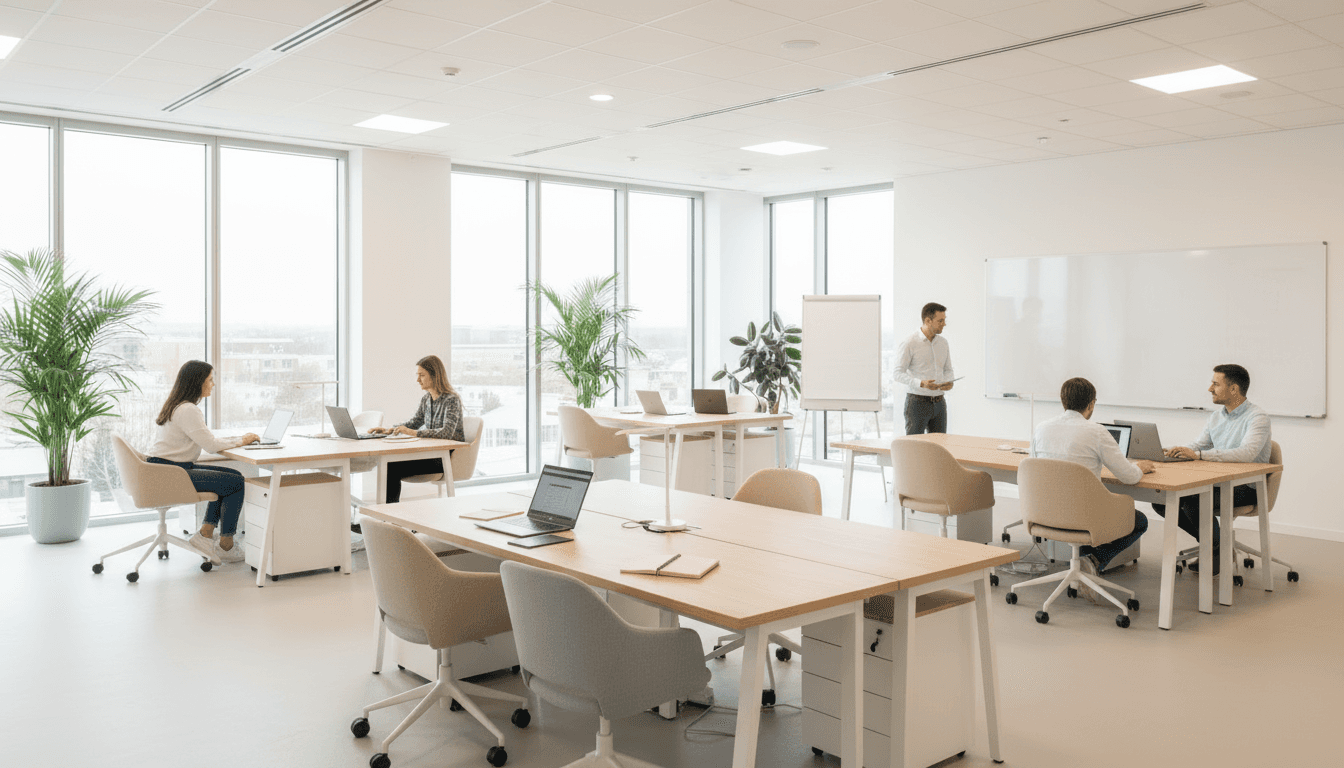
Key Insights: How to Prevent Everyone from Coming to the Office on the Same Day
Successful office organization in the context of Hybrid Work largely depends on how well office presence days are planned. Without a clear structure, there is a quick risk that all employees come to the office on the same days, while on other days, many spaces remain empty.
Coordinated Team Days: Fixed or coordinated office days prevent space constraints and simultaneously foster on-site collaboration.
Utilize Digital Booking Systems: Modern desk booking and room management tools ensure that office spaces are evenly utilized, avoiding overcrowding.
Clear Rules and Communication: Binding agreements create transparency and planning security for all employees.
Flexible Workplace Models: Concepts like Activity-Based Working (ABW) enable versatile use of spaces and increase satisfaction.
This creates a balanced harmony between working from home and office presence, ensuring that companies use their spaces optimally without chaos or conflicts arising.
What does office organization mean in Hybrid Work?
The modern working world has fundamentally changed: Hybrid work is no longer an exception but is becoming a strategic norm for many companies. The pandemic has accelerated this transformation and highlighted the importance of flexible work models like hybrid work. However, with this flexibility come new organizational questions—primarily: How do I avoid everyone coming to the office on the same day and overwhelming the workspace?
Office organization in hybrid work means designing workplaces, processes, and technologies in a way that home office and office presence seamlessly integrate. While in traditional offices each employee had a fixed workstation, the hybrid model requires new concepts: flexible desk-sharing solutions, digital booking systems, and clear rules for attendance days.
The central challenge lies in combining flexibility, efficiency, and employee needs. Many employees today desire a balanced mix of office and home office days, usually two to three days a week. This need for flexibility is increasingly becoming a crucial factor for employers in the competition for talent.
This development directly impacts office space and costs: Many companies report a 20-25% reduction in required office space after introducing hybrid policies, a clear financial advantage. Meanwhile, the requirements for the remaining office spaces are increasing: They must be designed to be more modern, flexible, and collaborative to meet diverse work styles.
How can you prevent everyone from coming to the office on the same day?
One of the biggest challenges of hybrid work is office organization: when all employees want to come to the office on the same day, it creates bottlenecks with workstations and meeting rooms. To prevent this, clear rules and smart tools are needed.
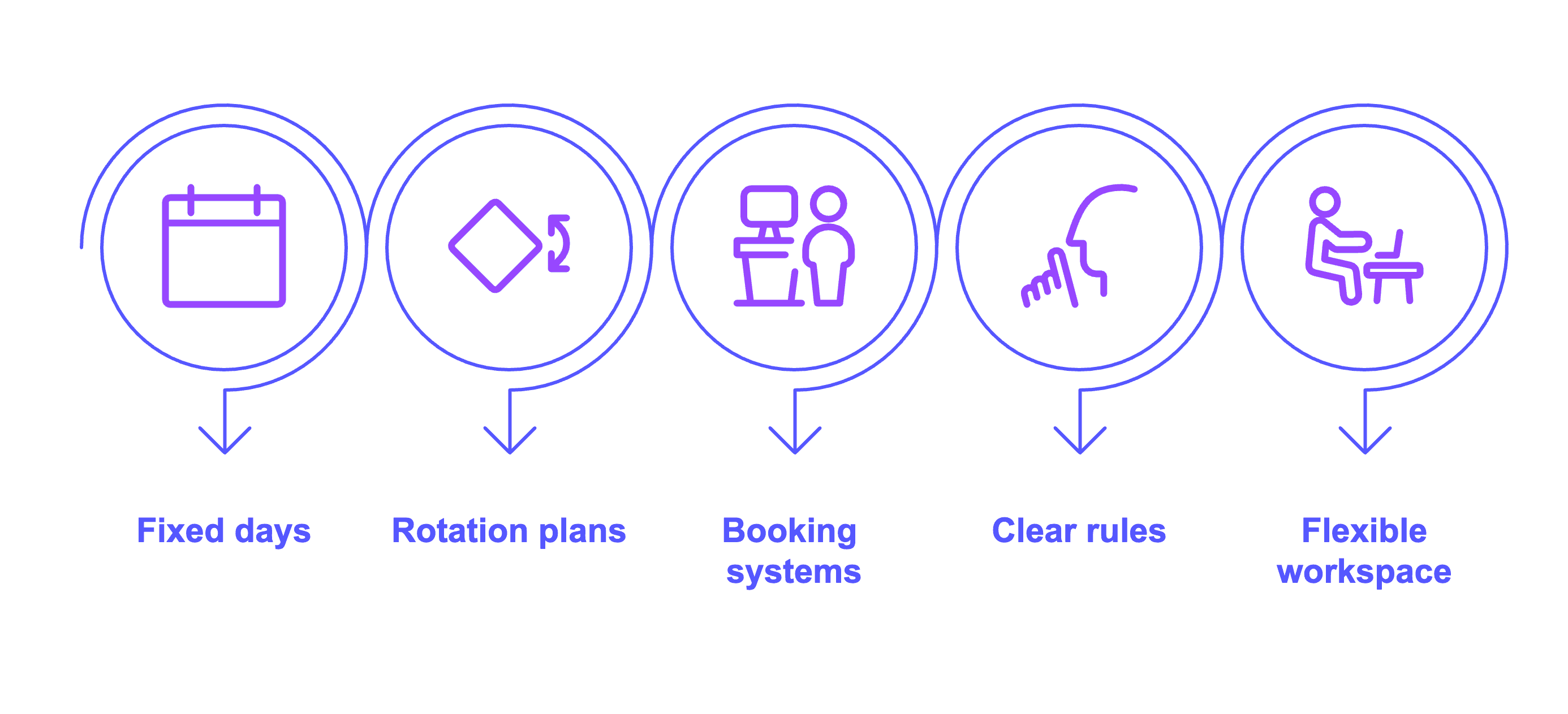
Fixed Office and Home Office Days for Teams
By setting core office days (e.g., Tuesday–Thursday), structure and planning security are created. Monday and Friday can be used flexibly for home office. This results in a better distribution of utilization.
Rotation and Coordinated Presence Plans
Alternatively, teams can rotate their office days. Example: Team A is in the office on Tuesday and Thursday, Team B on Wednesday and Friday. This prevents overcrowding while still allowing for regular exchange.
Implementing Booking Systems
Digital desk and room booking systems help manage office utilization. Limits for the maximum number of people per day and real-time overviews ensure that there are never too many people in the office at the same time.
Clear Communication and Rules
For the system to work, binding guidelines are necessary. Leaders should clearly communicate office and home office days and inform employees early if there are any changes.
Flexible Workspaces and Activity Based Working (ABW)
Through hot desking and various work zones (e.g., focus, collaboration, telephone), space is used efficiently. Employees can choose the appropriate workstation depending on the task.
Tips for Successful Office Organization in Hybrid Work
For hybrid work models to not only work on paper but also be successful in the long term, more is needed than just clear attendance plans. What really matters are the culture, leadership, and digital processes that offer employees both security and flexibility.
Establish trust-based leadership: Leaders should evaluate results instead of mere presence. This creates a culture where employees work autonomously while still taking on responsibility.
Ensure communication is clear and inclusive: Standardized tools and established communication channels ensure that information reaches everyone, regardless of whether they are in the office or working remotely.
Implement a video-first culture for meetings: Digital meetings should be designed in a way that remote participants are equally involved.
Utilize digital processes and standards: Documentations, workflows, and approvals must function independently of location. Standardized tools create transparency and efficiency.
Actively promote team cohesion: Virtual coffee breaks, hybrid team events, or regular check-ins prevent isolation and strengthen the community.
This way, office organization in hybrid work is not just a matter of space planning but also a lever for motivation, productivity, and employee retention.
Frequently Asked Questions (FAQ)
How many office workspaces are needed for hybrid working?
Generally, with 2-3 home office days per employee, 0.6-0.8 workspaces per person are sufficient. However, the exact number strongly depends on team size and the agreed-upon office days. Companies are best off starting with a slightly higher ratio and then adjusting based on actual utilization data.
What costs arise from transitioning to hybrid work?
Initially, there are investments in IT equipment, booking systems, and possibly renovations. These usually pay off within 12–18 months, as companies can save costs through space optimization. The ongoing savings in rent and operating costs significantly exceed the initial investments.
How to avoid chaos in workspace booking?
Chaos arises whenever there is uncertainty about who works where and when. The solution lies in automated desk and room booking systems that provide full transparency: Every employee can see in real-time which workspaces and meeting rooms are available and can book them easily. This prevents double bookings and misunderstandings.
Clear rules, such as a maximum booking duration, automatic release for no-shows, or fixed contingents for teams, further support fair usage. By combining with core office days, planning remains reliable without bottlenecks. Result: Everyone has planning security, office utilization is optimally managed, and frustration is avoided.
What to do about unequal treatment of office and remote employees?
A transparent hybrid culture is crucial. Meetings should always be hybrid-capable, promotion processes should be transparently documented, and feedback discussions should occur regardless of the workplace. A “video-first” culture ensures that everyone can participate equally.
How to measure the success of hybrid office organization?
Key KPIs are:
Workspace occupancy (optimal: 70-80%)
Employee satisfaction (regular surveys)
Productivity (output per employee)
Space cost per employee
Office attendance rate
A monthly dashboard with these metrics makes success measurable and enables continuous optimization.
anny as a comprehensive solution for your hybrid work organization

Organizing hybrid work models requires more than just good intentions; it needs clear processes and intelligent tools. This is where anny comes in: With anny, you can make workspaces, rooms, parking spaces, and more bookable across the company in a transparent manner.
Employees always have a clear overview, double bookings are avoided, and integrations with Microsoft Teams or Outlook simplify everyday use. Meanwhile, detailed analytics provide valuable insights on the busiest office days, serving as a basis for data-driven decisions and efficient office capacity management.
Would you like to learn more about how to successfully shape your hybrid work model with anny? Then book your free demo here.




" height="38px" id="bH388uk2E" transform="translate(1 1)" width="118.00000395534607px"/></svg>)