Aug 29, 2026
Desk Sharing vs Hot Desking: The Ultimate Comparison for Modern Workspaces
8 min.

Introduction: What is Desk Sharing vs Hot Desking & Why Is It Important
Desk Sharing vs. Hot Desking are two central workplace concepts that help companies optimize the use of office space and implement flexible work models. In this guide, you will learn the key differences, advantages, and disadvantages of both approaches and how to select the appropriate model for your business.
The modern work environment has fundamentally changed. Hybrid work models, remote work, and flexible working hours shape the daily work routine of many employees. At the same time, companies face the challenge of efficiently using their office spaces and optimizing costs.
Quick overview of the topics covered:
Definitions and differences between Desk Sharing and Hot Desking
Advantages and disadvantages of both work models
Practical implementation and tool recommendations
Practical examples and common mistakes
Understanding Desk Sharing and Hot Desking: Essential Concepts and Definitions
Key Terms Explained
Hot Desking is a way of working where employees can spontaneously use any available workspace in the office. The principle of “first come, first served” is central to this concept. In hot desking, there are no permanent assignments of desks to specific individuals - all workstations are freely available to all employees.
Desk Sharing, on the other hand, is based on a more structured way of working. Here, multiple employees share a workspace, but according to a planned system. Usage often occurs by department, shift-based, or according to set schedules.
Related Terms and Concepts:
Flex Desk: A general term for flexible workspaces
Activity-Based Working: Zoning of office spaces according to activities
Desk Hoteling: Pre-booking of workspaces via software
Hybrid Work: Combination of office and remote work
Pro Tip: Both concepts aim for optimal office space usage but differ fundamentally in organization and flexibility. Hot desking maximizes spontaneity, while desk sharing combines planning with efficiency.
Conceptual Connections
Desk Sharing and Hot Desking are central components of modern work models. They perfectly complement hybrid working concepts as they optimally balance the fluctuating presence of employees in the office. When combined with Activity-Based Working, dynamic office environments that support various working methods are created.
The concepts are also found in coworking spaces where freelancers and start-ups use flexible work areas. Their significance for the modern organization lies in the intelligent use of resources and adaptation to changing work habits.
Why Desk Sharing vs. Hot Desking is Important in the Modern Workplace
The relevance of flexible workplace concepts is reflected in concrete numbers and trends:
Cost savings through optimized office space utilization:
Traditional offices are only 60% occupied
Companies can save 25-40% of their office space through flexible workplace models
This corresponds to significant cost savings in rent, utilities, and facility management
Changed employee expectations:
73% of employees prefer flexible workplace options
Hot desk bookings increased by 95% in just one month after the pandemic
Modern workforce expects flexibility and choices in the work environment
Support for hybrid work models: These concepts enable companies to respond to fluctuating office occupancy while providing a professional work environment for all employees.
Desk Sharing vs Hot Desking: A Direct Comparison
Criterion | Desk Sharing | Hot Desking |
|---|---|---|
Organization | Structured, planned | Spontaneous, flexible |
Booking System | Reservation required | Free choice of seating |
Plannability | High | Low |
Flexibility | Medium | Maximum |
Control | Medium | Low |
Suitable for | Fixed & hybrid teams | Highly agile organizations |
Level of Organization:
Desk Sharing offers a medium level of structure with predictable workstations
Hot Desking maximizes spontaneity and requires daily adjustment
Technical Requirements: Both models need a solid IT infrastructure with Wi-Fi, cloud access, and mobile devices. The difference is in the management software: Desk Sharing typically requires a booking system, while Hot Desking can optionally work with real-time tracking.
Step-by-Step Guide: Choosing the Right Model for Your Business
Step 1: Company Analysis and Needs Assessment
Evaluating Current Office Utilization:
Measure actual attendance over several weeks
Identify peak times and idle periods
Analyze work habits of different teams
Checklist for Needs Assessment:
How many employees work remotely on a regular basis?
Are there fixed shifts or flexible working hours?
Do teams require regular collaboration in the same location?
How important is workspace personalization?
What technical prerequisites are already in place?
Step 2: Implement the Model
Build Technical Infrastructure:
Stable Wi-Fi throughout all office areas
Cloud-based systems for remote access
Mobile devices (laptops instead of desktop PCs)
Sufficient power outlets and USB ports at all workstations
Software Selection and Integration: For optimal management of both models, we recommend anny as a comprehensive desk sharing software. anny offers:
Intuitive booking for workspaces
Real-time overview of all resources
Analytics for optimizing office utilization
Integration into existing company systems
3D overview of premises
Workspace Design:
Setup of flexible workspaces without personalized items
Provision of storage spaces (lockers) for personal items
Various work zones for different tasks
Clean, uniform equipment on all desks
Change Management:
Clear communication of benefits to all employees
Training on using new systems and workflows
Pilot project with one department before company-wide rollout
Regular feedback sessions for optimization
Step 3: Measure and Optimize Success
Monitor Key KPIs:
Office Utilization: Target 70-80% for optimal efficiency
Employee Satisfaction: Regular surveys
Cost Savings: Compare area costs before/after implementation
Collaboration Quality: Measure team interactions
Optimization Loops:
Weekly evaluation of booking data
Monthly adjustment of available workspaces
Quarterly review of employee satisfaction
Annual evaluation of overall strategy
Avoid Common Mistakes
Error 1: Insufficient Technical Infrastructure
Many companies underestimate the importance of a stable IT foundation. Without reliable Wi-Fi, cloud access, and mobile devices, both concepts fail. Investing in modern technology is essential for the success of flexible work models.
Error 2: Lack of Clear Rules and Guidelines
Without clear rules, conflicts arise over popular workspaces. Establish clear guidelines from the start for bookings, cleanliness, and usage duration.
Error 3: Neglecting Employee Communication
The transition to flexible workspaces is a significant cultural shift. Without appropriate communication and training, resistance and frustration can develop among employees.
Pro Tip: Begin with a pilot project in an open-minded department. Gather experiences, optimize processes, and use positive results as a reference for other areas of the company.
Frequently Asked Questions about Desk Sharing vs Hot Desking
Which model is better suited for hybrid teams?
Desk sharing offers more planning certainty for teams with fixed office days, while hot desking enables maximum spontaneity for irregular office use. Many companies successfully combine both approaches.
How does the choice affect team spirit and collaboration?
Both models can foster collaboration, as employees come into contact with different teams more frequently. Active community management and regular team events are important for strengthening cohesion.
Which software is recommended for management?
anny offers optimal features for both models with intuitive booking, real-time overview, and comprehensive analytics. The software supports both planned desk sharing bookings and spontaneous hot desking use.
Are hybrid models combining both concepts possible?
Yes, many successful implementations combine both approaches. Fixed teams use desk sharing for planning certainty, while mobile employees benefit from hot desking areas.
What are the biggest challenges in implementation?
The main challenges lie in change management, the technical infrastructure, and the definition of clear usage rules. A gradual rollout with pilot projects minimizes risks.
Key Insights on Desk Sharing vs Hot Desking
Desk sharing is ideal for companies with structured teams and predictable office days. This model offers cost savings while maintaining planning reliability and is perfect for shift operations or departments with fixed work rhythms.
Hot desking maximizes flexibility for dynamic, spontaneous work styles. It fits perfectly with mobile employees, start-ups, and organizations with unpredictable attendance patterns.
Key success factors:
Both models enable cost savings on office space
Successful implementation requires solid technical infrastructure
Change management and employee communication are crucial
How anny can assist with Desk Sharing & Hot Desking
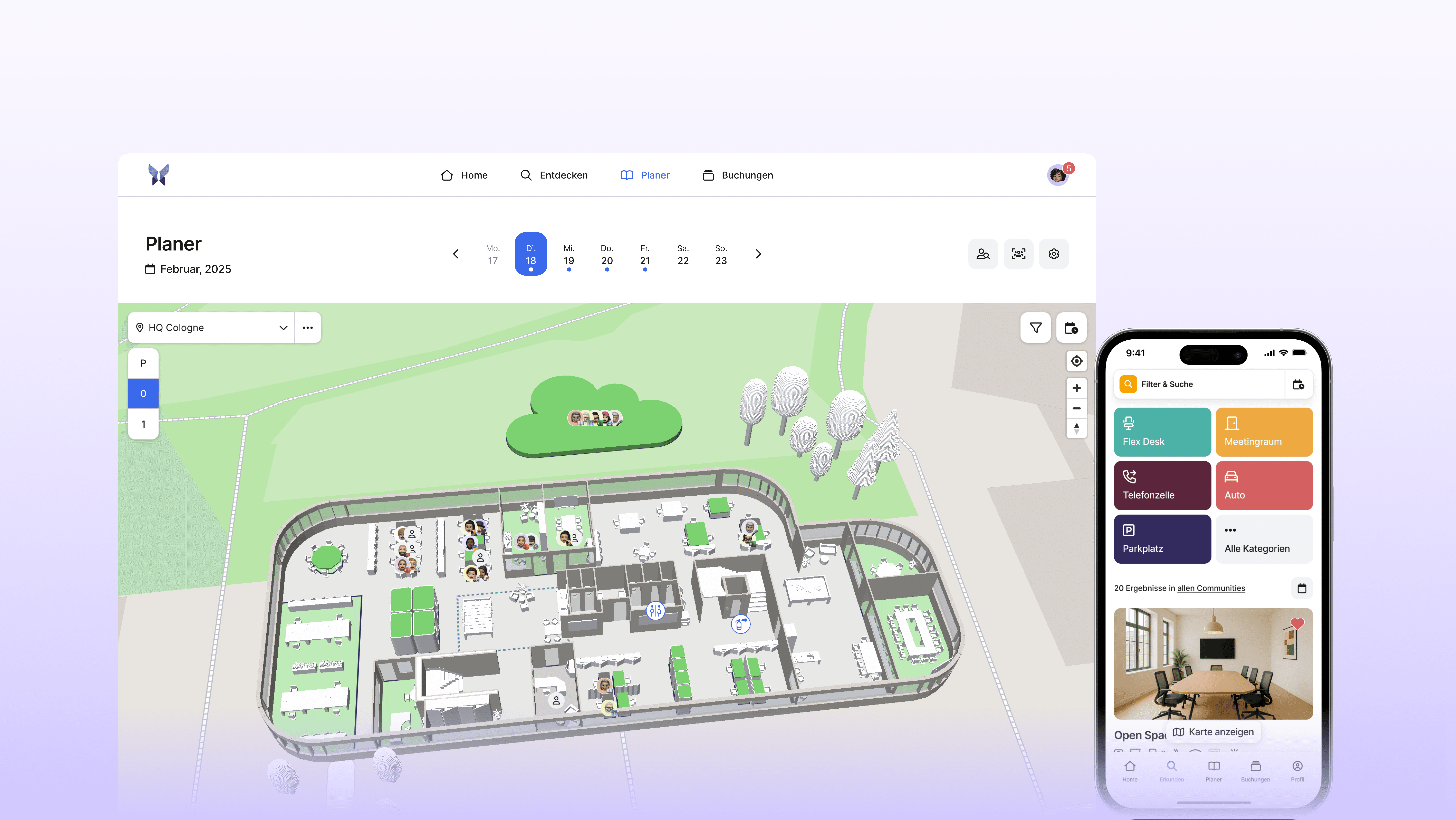
Whether it's hot desking or classic desk sharing, anny makes it easy to implement any workplace model efficiently. Thanks to the flexible booking platform, employees can see at a glance which workstations are available, reserve them in seconds, and plan their workdays perfectly. Businesses benefit from transparent occupancy rates, clear usage rules, and the ability to manage spaces dynamically. This is how anny ensures that both concepts run smoothly and deliver real value.
If you're ready to get started with desk sharing or hot desking, book your free, no-obligation demo with the friendly sales team at anny.
To see how anny compares to other providers, take a look here.