March 13, 2026
How to Create an Office Your Team Will Actually Want to Visit
4 min.

Key Insights
People love coming to the office when they find something there that they don't have at home: genuine encounters, spontaneous conversations, and the feeling of being part of a vibrant community. It's all about making the day in the office feel more valuable, energetic, connected, and lively.
Creating Shared Experiences: Workshops, team lunches, and community days are more impactful than any fruit basket
Taking the Work Environment Seriously: Good equipment, retreat zones, and spaces for interaction make all the difference
Anchor Days with Added Value: When the team knows that important colleagues are there, the trip is worthwhile
Visibility Creates Connection: Seeing who is in the office this morning encourages others to come and plan their day more effectively
Culture is Forged On-Site: Trust, humor, and cohesion grow through shared moments, not through video calls
From "Have to" to "Happy to Come"
Think back for a moment. To a moment at the office that wasn't planned. A conversation on the way to the coffee machine, an encounter in the elevator, a comment from a colleague that suddenly changed everything. Maybe it was an idea that emerged. Or just the feeling: I belong here.
Such moments can't be scheduled in a calendar. They happen or they don't.
That's precisely the quiet potential of a good office. Not the desk, not the fruit basket – but the unplanned moments in between. However, they don’t happen on their own. They need an environment that makes encounters possible.
The good news: It doesn't require a huge budget or mandatory presence. Often, it’s small changes that turn an empty floor into a place where people enjoy coming.
Why the Office is More Than Just a Workspace
An office isn't just a place where tasks are completed. It's the place where belonging is created.
Think about the first weeks of new team members: The colleague who casually asks, "Are you coming for lunch?" – without any fuss. The moment when you finally get an inside joke and really laugh along for the first time. Or when someone spontaneously stops and asks "How's everything going for you?" and genuinely means it. These small gestures determine whether someone says after three months, "I've settled in" or still feels like they're looking in from the outside. No onboarding document in the world can replace that.
What else happens in the office is hard to name, but immediately felt. The energy when a team works together on something. A glance that says "I understand you" without a word. Spontaneous laughter about something that can't be explained in the next team call. Trust grows precisely through these small signals – through feeling, not just hearing.
Culture doesn't emerge in calls. It emerges in moments. And they happen on site.
What Really Draws People to the Office – And What Doesn't
A fruit basket does not make an office culture.
Many companies invest in superficial benefits and then wonder why the floors remain empty. The truth is: People don't come for things, they come for connections.
What really attracts:
Pull Factor | Why it works |
|---|---|
Reliable presence of colleagues | No one likes commuting to a half-empty office – knowing the team is there makes the difference |
Accessible leadership | Quick decisions in 15 instead of 60 minutes, quick coordination without scheduling meetings |
Tangible atmosphere | Good lighting, pleasant acoustics, focus areas, and spaces for exchange, not just open-plan offices with noise-canceling |
Rituals with added value | Team lunch on Wednesday, joint Focus Friday in the silent area, quarterly after-work events |
Visible community | Celebrate successes, welcome new team members, experience shared milestones |
What does not attract:
Presence "because everyone is doing it": Forced presence breeds resistance, not motivation
Anchor days without agenda or real value: when the day feels like working from home, just with a commute
Symbolic benefits without say: when the foosball table gathers dust because no one asked what the team really needs
The core is simple: office incentives work when they are socially, emotionally, and professionally rewarding. When a day in the office feels "richer" than a day alone at home.
Concrete Office Incentives for HR & People Teams
Theory is one thing, but what really works when you have to implement it tomorrow? Five strategies that make a real difference in practice.
1. Formats that are only available on-site
What truly draws people to the office? Things they can't get elsewhere. Formats that simply work better live:
Creative workshops and joint problem-solving sessions
Brown-bag lunches with internal or external speakers
Demo days where teams showcase their current work
Monthly community moments: giving new team members a real stage, celebrating milestones together, making successes visible — not just on the intranet
These formats don’t need a big production. A 60-minute community moment once a month, that's honest and lively, beats any elaborate event that feels like a mandatory program.
2. Anchor days as an entry point – not a permanent solution
Anchor days are set days when a team intentionally comes to the office together. It’s not mandatory, but it’s a clear invitation. The underlying idea is simple: If I know my colleagues are here today, I’m more likely to come myself. The barrier lowers, and the likelihood of real interactions increases.
In practice, it often looks like this: The "Team Wednesday" in marketing, the "Product Thursday" in development. Days when joint formats take place – a brief review, a lunch & learn, a retrospective. Activities that give the day substance beyond the normal work routine.
But beware of a thinking error: Seeing anchor days as a permanent steering tool creates a new form of structure – not a real culture. The goal should not be for someone to come because today is Team Thursday. The goal is for people to come because they value the energy there – even with people from other teams that they never meet in the calendar.
Anchor days can help spark this dynamic. But those who want to change something in the long term work on the feeling – not the calendar.
3. Spaces that enable encounters
Spontaneous encounters need space – literally. Many offices are designed in a way that you walk directly from the entrance to the desk and back without meeting anyone.
This can be changed with small interventions: Coffee points as real meeting places instead of hallway storage areas, a lounge area with whiteboards that invites you to linger, open spaces between departments instead of departmental silos.
Important: These spaces only work if they are maintained and enlivened. An "Idea Wall" that gathers dust after two weeks is worse than nothing. Better to do one small area really well than many half-hearted concepts simultaneously.
4. Team leads as the real lever
Leaders as role models – that's true. But the decisive influence usually doesn’t come from the executive management, but from the direct team lead.
When your own team lead says "I'm in the office on Wednesdays and Thursdays – feel free to stop by," it has more impact than any community day. It's not a presence expectation – it's an invitation. The difference lies in the tone and voluntariness.
What helps: Team leads actively and visibly communicate their office days – for instance, in the calendar or team channel. No pressure, but guidance. Knowing that your leader is here today, you're more likely to come yourself.
5. Listen – and act visibly
You only learn what your team really needs by asking questions. Short, regular pulse surveys with three to five targeted questions provide more insight than a complex annual employee survey:
"On which days do you prefer coming to the office – and why?"
"What would bring you to the office more often?"
"What currently annoys you the most?"
The decisive step comes afterward: Feedback must be visibly addressed. If noise is frequently mentioned, focus zones are created in the next quarter. If there is a desire for more joint formats, a monthly community lunch starts. Nothing builds more trust than the feeling: We have been heard – and things have changed.
Transparency as a Game Changer: Who is in the office and when?
There's a reason why some office days are just better than others: You know in advance that the right people will be there. No guesswork, no disappointment when you find a half-empty floor after a 45-minute commute.
This is exactly one of the most underestimated levers when it comes to making people want to come to the office: Transparency about who will be there and when. The mere visibility of presence changes behavior; anyone who sees their team is on-site today plans the day differently. And is more likely to come themselves.
In practice, this often fails due to a simple question: Where can I even see that? In many companies, there is no good answer to this. Desk sharing is already a reality, but without the right structure, Excel lists, team questions, and the silent chaos of "Who's sitting where today?" arise.
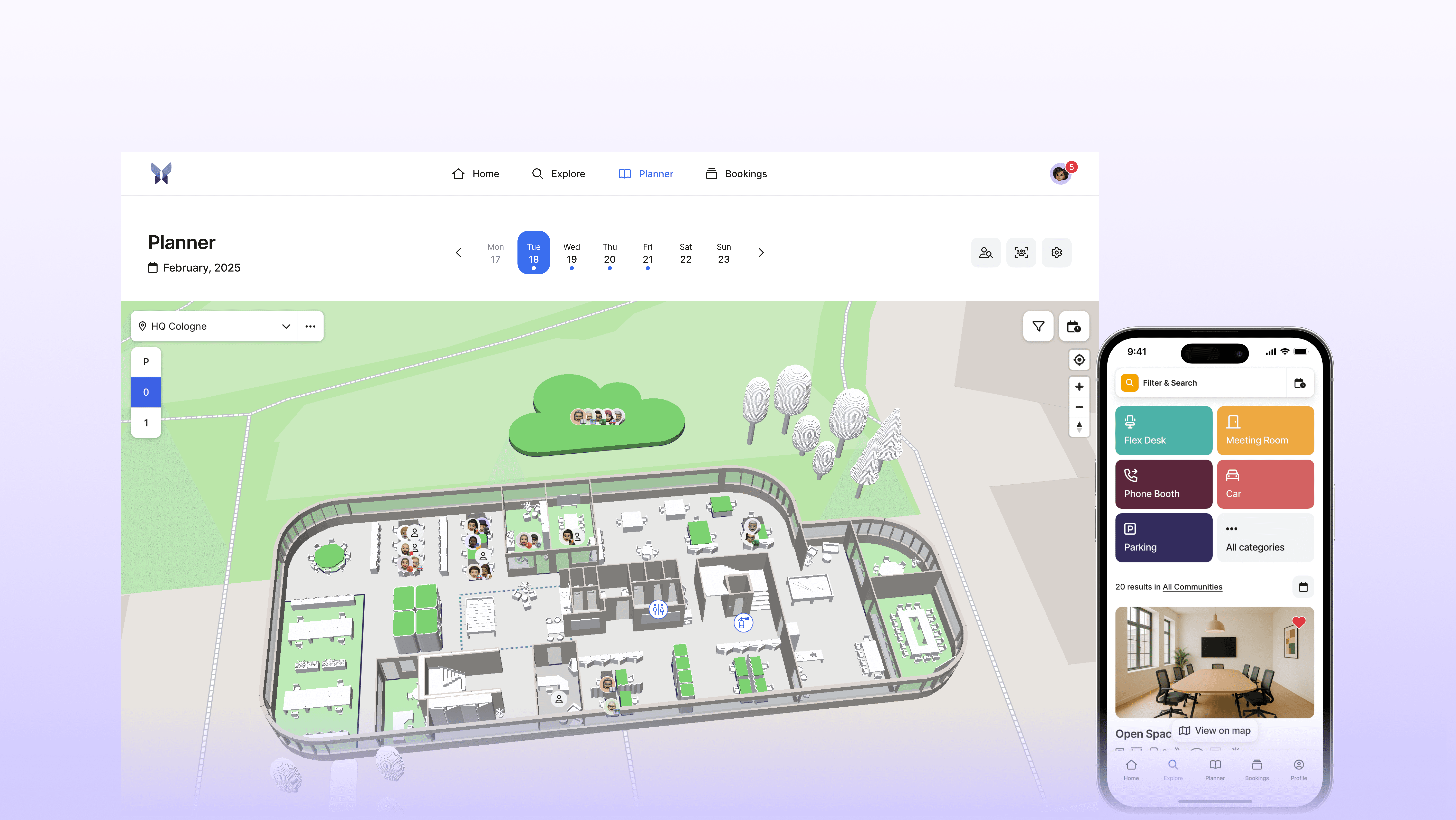
This is where a platform like anny comes into play. Employees can see at a glance who is in the office when and can plan their day accordingly. Desks, meeting rooms, and spaces can be booked in seconds. An employee opens the app in the morning, sees that her team is there on Tuesday, books a spot nearby, and reserves a room for the planned workshop. What previously required three Slack messages and an Excel document now happens in a moment.
But the real added value lies deeper: When people see who's there, a natural pull is created. You no longer come "on a hunch," you come because you know it's worth it. This noticeably changes the office dynamics without anyone having to be asked to do so.
For HR teams, there's an additional advantage: Occupancy data shows which days and rooms are really used and which are not. These are not abstract numbers but the basis for better decisions: Which anchor days make sense? Where is more space needed? What truly attracts people?
Transparency creates connection. And connection creates the desire to be a part of it.
How to strategically implement office incentives
Office culture isn't changed with a project kickoff and a PowerPoint presentation. It is an ongoing process that begins with honesty about where you currently stand.
Understand First, Then Act
Before implementing any measure, it is worth taking an honest look at the current state: Which days are busy, which are empty? What prevents people from coming more often – commute, lack of spaces, the feeling that no one is there anyway? A short survey with three to four open-ended questions often provides more insights than any analysis. And for those already using a booking system like anny, usage patterns can be directly observed – without relying on guesswork.
Less, But Really Good
The most common mistake is to start five initiatives at once and not implement any of them properly. It is better to focus on two or three measures – and execute them thoroughly. A monthly community moment, a first anchor day, clear communication about who is in the office when. That's enough for a start.
Always Explain the Why
Every measure needs an honest reason – not a PR statement, but a genuine sentence: “We are introducing Team Wednesday so you can meet more easily – without an appointment, without an agenda." People respond to invitations that feel sincere.
Observe, Adjust, Continue
What works becomes clear after a few weeks. Which days fill up? What gets booked, what doesn’t? Where does feedback indicate genuine enthusiasm – and where is the response lacking? These signals are more valuable than any predefined attendance quota. Office culture is not a goal to be achieved. It is something that you continuously shape.
Conclusion: Design office incentives deliberately – don't mandate them
An office that truly attracts people is not created by rules. It is created through moments that are unmatched elsewhere. Through an atmosphere you can feel when you enter the room. Through the feeling of being seen and belonging.
This is not a matter of budget. It is a matter of attitude, whether you manage the office as a place of obligation or design it as a place where connection is possible.
The first step doesn't have to be large. An honest status check, an initial anchor day, a monthly community moment, and transparency about who is there when. Those who want to see how the latter works in practice can easily try it with anny.
FAQ on Office Incentives for Employees
How do I find out which measures really work for our company?
The best approach is to combine multiple methods: brief anonymous employee surveys, open discussion rounds, and small experiments with a clear duration. For example, test a "Community Wednesday" for eight weeks and then gather targeted feedback. Anyone already using a booking system additionally receives objective usage data – and can see in black and white which days and rooms are truly favored.
What role does office design play in comparison to benefits like salary or bonuses?
Salary is the entry ticket, but atmosphere and culture decide on long-term retention and genuine motivation. It's not about luxury, but about fit: quiet zones for focused work, open spaces for interaction, areas that invite you to stay. Those who consciously invest in room design and community formats, instead of just one-time monetary benefits, build something that has a lasting impact.
How do I deal with employees who don't want to come to the office?
Understand before you act. Long commutes, family situations, bad experiences with open-plan offices, reasons are often very specific. Instead of introducing attendance expectations, it's worth defining "meaningful occasions" together: a project kickoff, a retrospective, an onboarding day. If someone can also see when colleagues are on site, barriers often decrease on their own.
At what company size does a booking system become worthwhile?
From the moment the question "Who is actually sitting where today?" regularly appears in Slack – regardless of company size. In practice, this often becomes apparent with about 30 flexible workstations. Tools like anny can be used to scale: from a single location to multiple offices. For HR teams, it's particularly valuable that occupancy data provides real decision-making foundations – instead of gut feelings.
How long does it take for changes to become visible?
Initial effects – more presence on certain days, positive feedback on new formats – are often noticeable after six to eight weeks. Stable changes in office culture take more like three to six months. What makes the biggest difference: consistent communication and leaders who exemplify what they expect from the team.