

March 14, 2026
Team Cohesion: How a Genuine Sense of Unity is Created and Why It Doesn't Come Naturally
5 mins

At some point, the sense of team spirit simply became quieter
The office is occupied, but somehow not really vibrant anymore. Everyone is working, everyone is nice. But that true sense of belonging that used to be naturally present? It has become harder to grasp.
The after-work beer that used to happen spontaneously. The quick chat at the coffee machine that suddenly turned into the best idea of the week. The moments when you felt: We're all pulling together here. They happen less frequently, sometimes barely at all.
If you're recognizing this as an HR manager, you're not alone. And it's not a small problem: Because what's lost is not just the mood. It's the glue that holds teams together—the connection that leads people to step in for each other, be honest with each other, and start the day motivated.
The good news: This can be shaped. Not through directives, but through conscious decisions that make real encounters possible again.
An Honest Look at the Office: Why the Sense of Unity Often Feels 'Thinner'
Start of the week. You enter the office, see a few colleagues at their desks, the rest are not there. No conversation in the kitchen, no spontaneous lunch, no brief chat in the hallway.
This might seem trivial. But it's not.
Almost 90% of people form genuine friendships at work during their career. And these friendships are much more than a nice side effect for companies – they are the reason someone is motivated to start the day, why teams stick together in tough times, why someone stays despite the possibility of earning more elsewhere.
The problem: Such connections do not develop in video calls. They arise in those very moments that are becoming increasingly rare.
Why the sense of community doesn't just come back
Many people think: If people start coming into the office more often again, team cohesion will naturally come back. But it’s not that simple, and anyone who looks closely will see why.
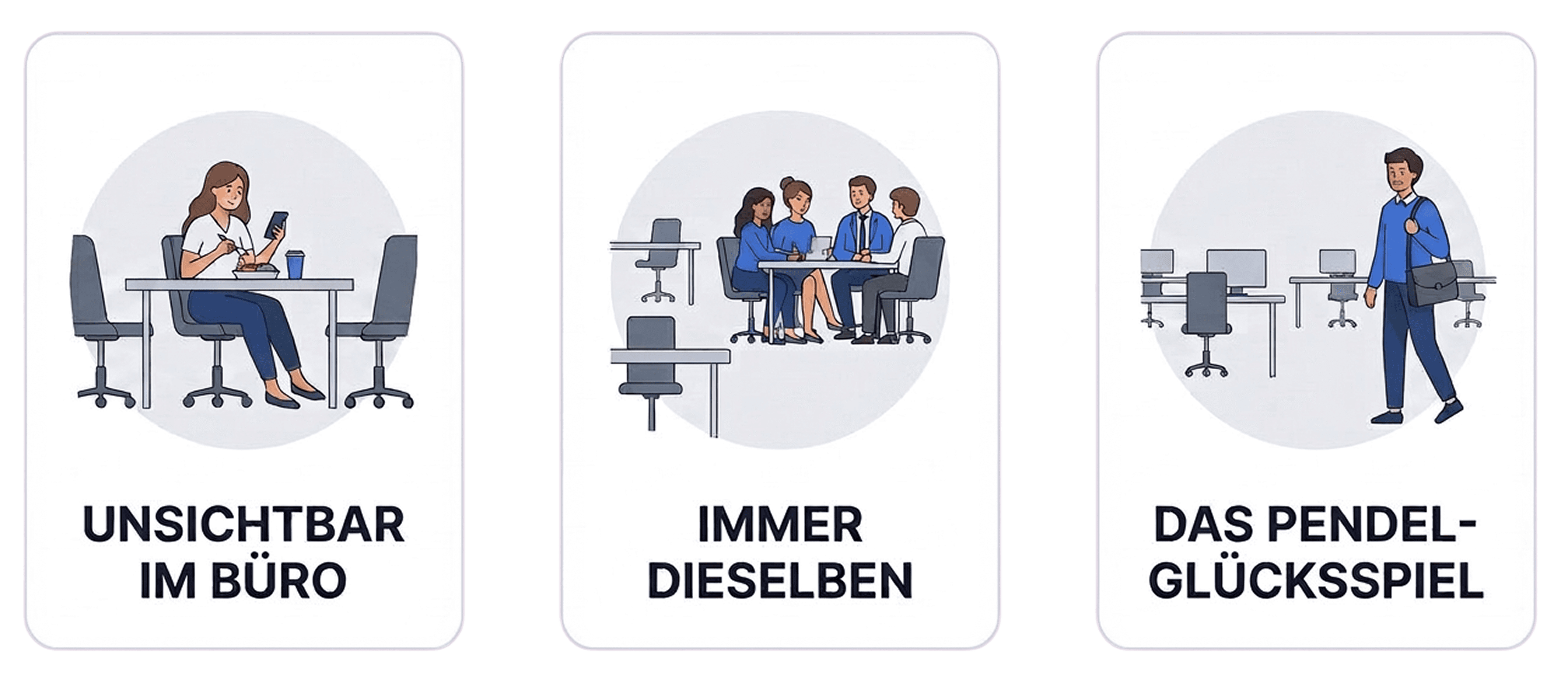
There’s the new colleague in her third week. She has a question, sends a Slack message – and waits. No one asks whether she wants to join them for lunch. She eats alone at her desk. After three months, she starts wondering whether this job is really the right fit. No bad intentions. Just no one who noticed.
There’s the team that comes into the office every Tuesday – but it’s always the same four or five people. Other teams stay away. People keep to themselves, and new connections don’t form. The cross-functional exchange that once sparked the best ideas? It’s no longer happening.
And then there’s the quiet problem that’s hardest to pin down: No one knows who’s in the office when. Getting there becomes a gamble. Anyone who has commuted for 45 minutes and then sat alone on a half-empty floor will think twice next time. A vicious cycle begins – and no one consciously chose it.
There’s no failure or indifference behind it. Team cohesion quietly withers, with fewer shared moments, fewer spontaneous encounters, and fewer situations where real connections could form. Eventually, the distance becomes so normal that no one notices it anymore. And that is the real problem.
How Bad and Good Team Culture Make an Impact: A Short Story
Imagine spending a day with two different teams in the same company.
In Team A, everyone is sitting at their desks, headphones on, eyes on the screen. The 10 a.m. meeting gets ticked off, action items are checked off, and then everyone goes back to their own work. When a new colleague in her third week has a question, she sends a Slack message and waits. Nobody asks her at lunch whether she wants to join them. She eats alone at her desk. After three months, she starts wondering whether this job is really the right fit.
In Team B, the day looks different. Two colleagues quickly aligned before the meeting—not because they had to, but because they knew the other person was working on the same topic. When someone admits in the retro that they are stuck, someone else immediately offers help. The new colleague? She was invited to lunch on her first day. Today, she is the one showing new people the ropes.
The difference between these two teams is no coincidence. It is the result of moments, hundreds of small interactions, shared experiences, and the feeling that you are not alone. That is exactly what sets real team spirit apart from polite side-by-side working.
How Genuine Connections Are Built – Practical Levers for HR
HR is not the company's event organizer. HR is the one who creates the conditions in which connections can happen and that is a fundamentally different job.
Because team cohesion can't be staged. It grows in the gaps between meetings, over a shared lunch, when someone asks “How are things really going for you?” — and truly means it. What HR can do is create and protect those gaps.
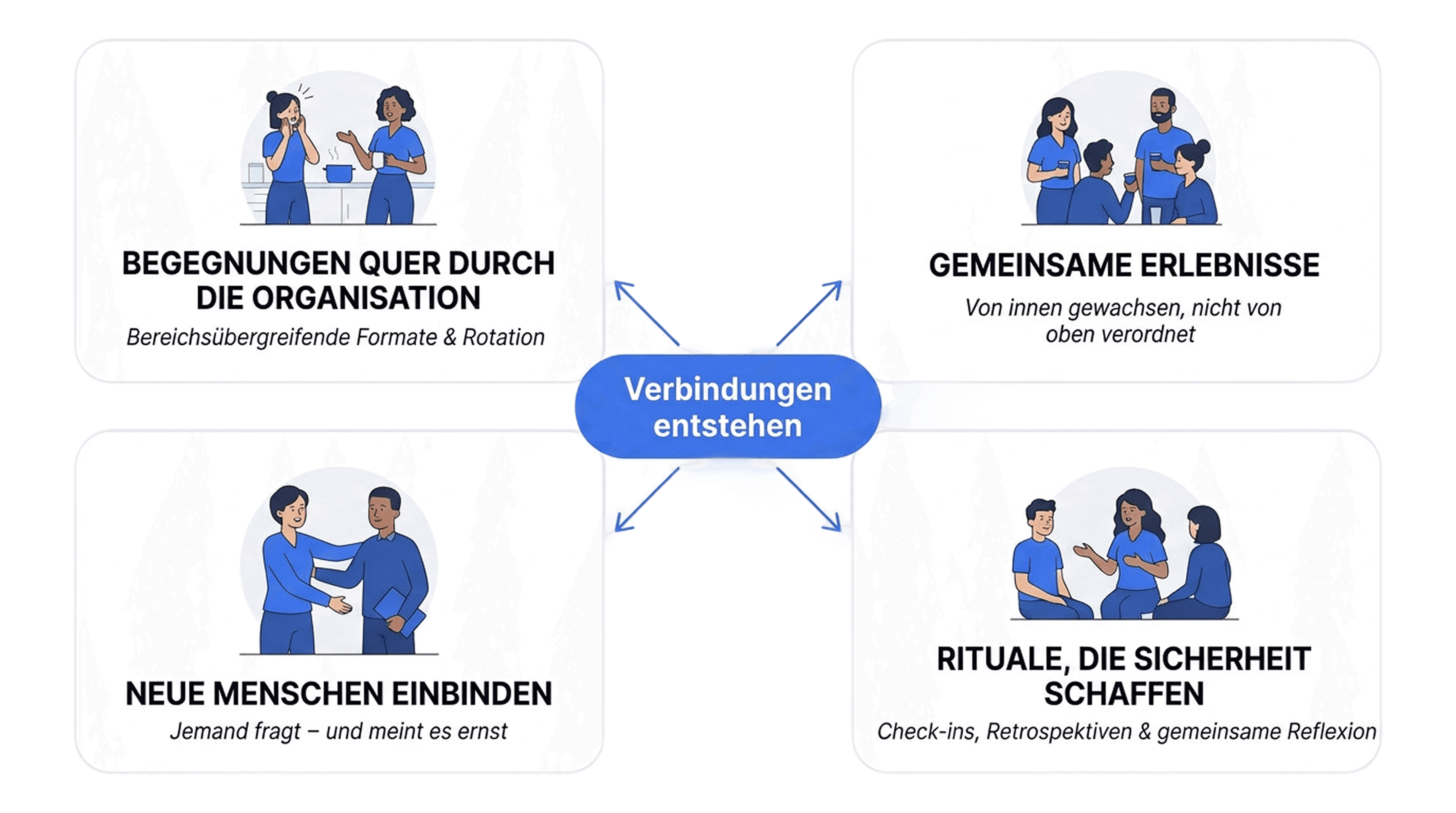
Four practical levers to make it happen:
Connections across the organization
One of the most common mistakes is thinking about cohesion only within teams. But real connection also happens between people who don't work together every day — between the colleague in marketing and the developer who happen to meet in the kitchen and suddenly realize they are working on the same problem.
This doesn't happen automatically. It takes formats that bring people together from different parts of the organization — not as a mandatory program, but as a genuine invitation. A monthly cross-functional lunch where participants rotate. An open format where teams briefly show what they're working on. Small things that happen regularly — not big events that take place once a year and are then forgotten.
Shared experiences that can't be forced
Employees immediately sense whether a format is a genuine invitation or a hidden obligation. The difference is not in the format itself — but in who suggests it, how it is communicated, and whether it is truly voluntary.
What works: formats suggested and co-created by the teams themselves. A summer party organized by someone on the team because they want to do it. A running group that grows out of a spontaneous Slack post. These are things HR can kick off and frame — but they need to grow from within, not be imposed from above.
Really including new people
New employees are especially vulnerable in this respect. They join a team with its own history, its insider jokes, its unwritten rules. And they see all of it from the outside — without knowing how to get in.
What helps here is not a big onboarding architecture. It's the colleague who asks, “Want to come to lunch?” — and means it. It's the experienced contact person who not only answers technical questions but also explains how things really work here. HR can't take on that role — but HR can make sure someone does.
Rituals that create psychological safety
Cohesion only grows where people feel safe enough to be honest. A short weekly check-in that doesn't just cover tasks, but also how people are doing. A retrospective that treats mistakes as learning moments, not failures. A “Wins & Learnings” moment at the end of the week that shows: we see what you're contributing. These rituals take very little time. But they send a message that matters — and once you've experienced that, you immediately notice when it's missing.
An Underestimated Lever
When it comes to who truly shapes the cohesion within a team, many first think of HR initiatives or messages from management. But the strongest influence lies elsewhere: with the direct manager.
It's not because they organize events or give motivational speeches. It's because employees observe every day how their manager behaves. Whether they inquire about how someone is truly doing. Whether they are present in the office themselves or just expect others to be. Whether they address conflicts or avoid them. Whether they offer recognition or silently assume that good work is a given.
A team lead who says "I'm in the office on Wednesdays and Thursdays, feel free to stop by" and truly lives it, makes more of an impact than any community day. Because it’s not an event. It’s an invitation from someone you trust.
This also means: HR can create the best infrastructure, develop the most thoughtful formats, and introduce the right tools, but if leaders do not exemplify cohesion, it dissipates. That's why investing in leadership development is not a soft measure. It is one of the most direct ways to foster a culture where people are happy to be part of the team.
When the desire for connection meets reality
Everything we have talked about so far – conscious encounters, cross-departmental exchange, the feeling of knowing that today there’s someone worth having a conversation with – requires one basic condition: that people know when it’s worth coming in.
And this is often where it fails in practice. Not due to good intentions. But because no one sees who is in the office when. That desk sharing might work on paper, but in reality, it consists of Excel sheets, Slack messages, and silent frustration.
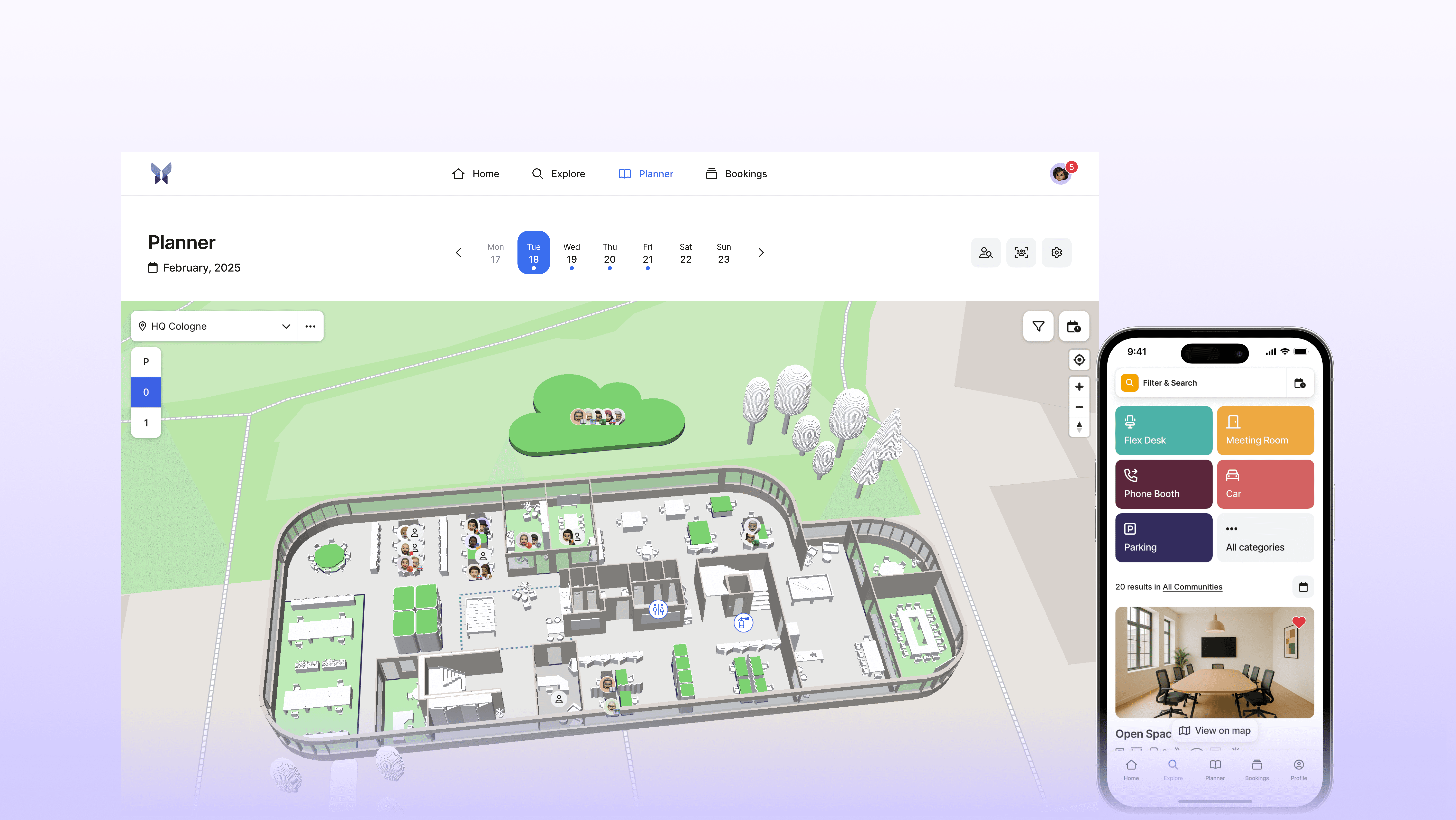
This is precisely the starting point of anny. Employees can see at a glance who is coming to the office on which day and can consciously plan their own day accordingly. Desks, meeting rooms, and shared spaces can be booked effortlessly. And if someone wants to organize an internal community event, they can coordinate it directly through anny.
The real value doesn’t lie in managing spaces. It lies in turning the gamble of "Is it worth the commute today?" into a conscious decision. And that people who have wanted to reconnect for a long time can more easily find the right moment to do so.
Cohesion cannot be mandated – but it can be crafted
A true sense of belonging doesn’t arise from a new HR initiative, an annual team-building event, or an email from management. It emerges in the small moments in between. In the spontaneous conversation after a meeting. In the moment when someone notices a colleague needs support and simply asks.
These moments can’t be forced. But you can create the conditions that make them more likely. Through leaders who exemplify what they wish to see from the team. Through formats that are genuine invitations, not hidden obligations. And through transparency about who is present when – so the commute to the office isn't a gamble.
That's the real task of HR in this context. It's not about organizing events. It's about creating spaces – both literally and figuratively – where connection can happen.
A good first step towards that: Look at how desk sharing creates transparency about who is in the office when and how it already makes a difference.






" height="38px" id="bH388uk2E" transform="translate(1 1)" width="118.00000395534607px"/></svg>)