

Amira van Weegen
Junior Marketing Manager
October 24, 2025
Desk Sharing: Benefits, Drawbacks, and Tips for Successful Implementation
4 min
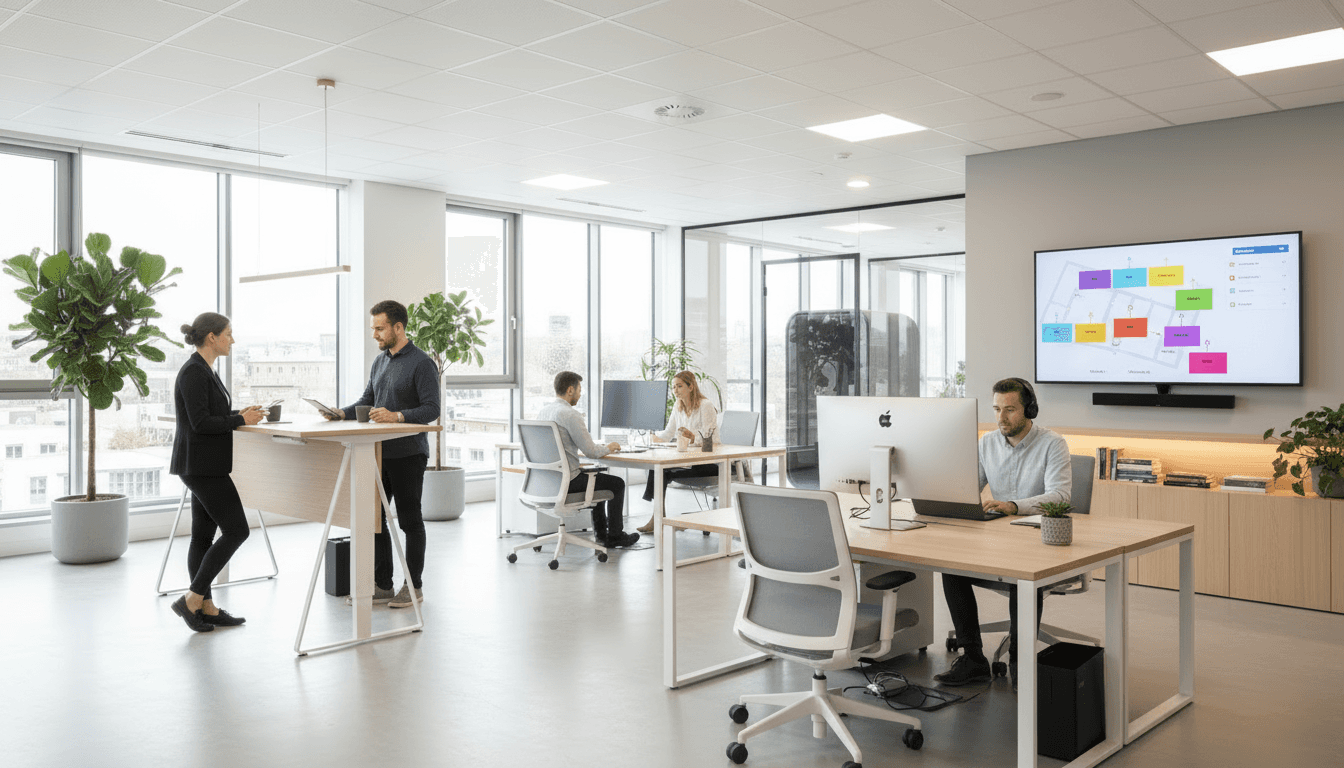
Desk Sharing: Benefits, Drawbacks & What Companies Should Know Before Implementation
Desk Sharing, or the flexible use of workplaces instead of assigned desks, is becoming a daily reality in more and more companies. Driven by Hybrid Work, rising rental costs, and the desire for greater flexibility, the traditional office structure is fundamentally changing. But what is really behind it?
Proponents see it as a modern solution for efficient space utilization and increased dynamism in everyday work. Critics, on the other hand, warn of organizational chaos and declining satisfaction.
In this article, you will learn which advantages and disadvantages Desk Sharing truly brings, when the concept makes sense and when it doesn't. We will also show what companies should pay attention to when implementing it and how digital tools can help successfully implement Desk Sharing.
What is Desk Sharing?
Desk Sharing refers to a work model where employees do not have fixed desks, but rather use flexible workspaces they can choose based on their needs. Unlike traditional office setups, desks are not permanently assigned to one person but are shared by multiple employees. This desk sharing model allows for more efficient use of available spaces and resources while creating greater flexibility in daily work life.
In practice, there are two common formats:
First come, first served - whoever arrives at the office first selects an available spot.
Booking via software - employees reserve their workspace in advance.
The latter is increasingly preferred, as modern desk sharing software simplifies workspace management, ensures transparency, and avoids conflicts over space selection.
The goal of the desk sharing concept is optimal use of office space and technical resources. Often, there are more employees than available workspaces, leading to better space efficiency and lower operating costs. At the same time, employees can choose the workspace that best suits their current tasks, whether for focused work, creative collaboration, or meetings.
Thus, desk sharing not only enhances productivity but also fosters a modern, dynamic work environment that meets the demands of New Work.
Benefits of Desk Sharing
Desk sharing offers numerous advantages, both for companies and employees. The following points demonstrate why the desk sharing concept is increasingly adopted in modern work environments:
Cost savings through more efficient space utilization
Since employees no longer need their own desk, companies can plan their office spaces smaller or utilize them better. Unused areas are reduced, leading to lower rental and operational costs.Flexible workplace design
Employees can freely choose their workplace depending on the task or mood, such as a quiet area for focused work or a collaborative room for teamwork. This flexibility boosts motivation, satisfaction, and productivity.Promotion of interaction and collaboration
With changing seat neighbors, there is more interaction between departments, which strengthens idea exchange and team dynamics. The office becomes a place of meeting and collaboration, rather than just a workplace.Better space utilization and sustainable resource use
Desk sharing contributes to a more sustainable use of office spaces and resources. Fewer unused workspaces mean less energy consumption, less equipment, and an overall smaller ecological footprint.Adaptability to modern work models
The concept is ideal for combining with hybrid work or remote work. Employees who are not in the office daily don't require a fixed desk, allowing companies to respond flexibly to changing occupancy numbers.Enhancing employer attractiveness
Flexible work models are a crucial factor for employer branding. Companies that offer desk sharing appear modern and employee-oriented, a plus in the competition for skilled workers.
Disadvantages of Desk Sharing
Despite many advantages, desk sharing also presents some challenges that companies and employees should consider:
Lack of a personal work environment
Because desks are regularly rotated, employees cannot customize their workspace or leave personal items behind. For many, the loss of a fixed location can impact their satisfaction and sense of belonging.Stress from daily seat searching
Having to find or book a new desk every day can quickly lead to discomfort and additional organizational burden. Especially during peak times or high occupancy, this can result in frustration and decreased productivity.Technical and organizational hurdles
For desk sharing to work, every workstation needs to be equipped equally from a technical standpoint. Missing docking stations, monitors, or connection issues can hinder workflow. Also, unclear booking rules can lead to conflicts when multiple people claim the same spot.Data protection and security
With changing workstations, there's an increased risk of confidential documents or devices being left unattended. Companies need to establish clear guidelines and secure IT solutions to ensure data protection and information security.
Successful Launch of Desk Sharing
For desk sharing to be successful in a company, it requires more than just flexible workplaces. Key factors are clear rules, digital tools, and open communication. The following points will help implement the concept successfully in the long term:
Clear Guidelines and Clean Desk Policy
A binding framework provides orientation. Particularly important is a Clean Desk Policy, which stipulates that all employees leave their workspace tidied and free of personal items at the end of the day. This keeps the office orderly, and the workspaces can be easily reused.
Digital Systems for Workspace Management
A Desk Sharing Software is the key to efficient organization. Through digital tools, employees can book workspaces in advance, view occupancy plans, and ensure the needed equipment is available. This reduces uncertainties, saves time, and increases transparency in daily office operations.
Communication and Employee Involvement
Desk sharing changes usual work routines, making it all the more important to involve employees early on. Open communication, feedback sessions, and training help build acceptance and trust. When employees understand the purpose and benefits, their willingness to actively support the new model increases.
Adaptation and Continuous Improvement
Desk sharing is not a one-time project, but a continuous process. Regular evaluations and feedback help optimize the system, for example, through adjustments in room layout or booking logic. This keeps the model flexible and adapts it to the actual needs of the company.
Alternatives to Desk Sharing
Alongside Desk Sharing, there are other concepts that facilitate flexible and modern working. They pursue similar goals but focus on different aspects, depending on the work culture and company structure.
Hot Desking
With Hot Desking, employees choose a free workspace daily without reserving it beforehand. First come, first served. This model promotes spontaneous collaboration and ensures a dynamic use of office spaces. However, it may lead to uncertainties when spaces are limited or teams wish to work together.Activity Based Working (ABW)
The concept of Activity Based Working takes it a step further: employees select their workspace based on their current task, such as a quiet room for focused work, a lounge for creative meetings, or an open area for team exchanges. This model enables a highly individualized workspace design and can sustainably boost productivity, creativity, and satisfaction.
Both models promote - similar to Desk Sharing - flexibility, efficiency, and collaboration. The key difference lies in the degree of structure: while Desk Sharing typically employs fixed booking systems, Hot Desking is based on spontaneity, and Activity Based Working is task-oriented.
Companies should carefully evaluate the different flexible work models to choose the one that best fits their corporate culture, team structure, and working style.
anny: A tool for desk sharing and workspace booking
An effective implementation of Desk Sharing heavily relies on the right technology, and that's exactly where anny steps in.
anny is an intuitive desk-sharing software that helps companies utilize office spaces efficiently and provide employees with a modern, flexible work environment.
A special highlight is the interactive 3D map, where workspaces, rooms, and even home offices can be visually displayed and booked directly. Employees can see at a glance which spaces are available and can reserve their workspace with just a few clicks, without any organizational hassle.
Furthermore, anny can be seamlessly integrated into existing systems like Microsoft 365 and Google Workspace. These integrations simplify booking workspaces, meeting rooms, or parking spaces, ensuring smooth office operations.
With anny, companies can always keep track of occupancy, utilization, and usage patterns of their office spaces. This enables optimal resource planning, reduces costs, and simultaneously boosts employee productivity and satisfaction.
In short: anny makes desk sharing not only possible but simple and transparent for companies wanting to shape the office of the future today.

Key Questions & Answers on Desk Sharing
How many employees share a workstation with desk sharing?
That depends on the usage concept and the attendance rate. Typically, companies plan for 1 workstation for 1.3 to 1.7 employees. It is important to regularly review the ratio to avoid bottlenecks.
How is desk sharing organized?
Successful desk sharing only works with a clear structure. Most often, digital booking systems like anny are used, through which employees can reserve workstations in advance or book spontaneously. This keeps occupancy and utilization transparent.
How does desk sharing affect company culture?
Desk sharing can enhance communication and team spirit if it is implemented correctly. It also changes habits, which is why trust, self-responsibility, and openness are important success factors.
How can companies ensure that desk sharing works fairly?
Clear rules, a Clean Desk Policy, and a transparent booking system prevent conflicts and ensure fairness. Employees should regularly be able to provide feedback to continuously improve the model.
What does desk sharing cost?
The costs depend on the chosen software. With anny, prices start from 2€ per resource, and a complete overview can be found here. Generally, desk sharing pays off quickly, as space costs are reduced and resources are used more efficiently.
How does anny specifically support companies with desk sharing?
anny provides an intuitive booking platform with 3D maps, calendar integration, and real-time overview. This makes it easy to manage workstations, rooms, and other resources like equipment or courses, ensuring more transparency and employee satisfaction in everyday office life.
Desk Sharing as an Opportunity
Desk sharing is much more than just a trend, it is an integral part of modern work culture. When implemented correctly, it can help companies reduce costs, use office space efficiently, and create a flexible, dynamic work environment. Employees benefit from more freedom, variety, and team interaction.
At the same time, the challenges should not be underestimated: The loss of personal workspaces, potential organizational effort, and data privacy issues require careful planning and clear structures. Without the right tools and transparent communication, desk sharing can quickly reach its limits.
However, those who rely on a well-thought-out concept and the right technology can take full advantage and rethink the workplace.
With anny, getting started is effortless:
The smart desk-sharing software combines intuitive workspace booking, transparent space overview, and seamless integration into existing systems like Microsoft 365 or Google Workspace. This way, teams maintain an overview, work more efficiently, and experience the office as a true place of encounter.
Book a demo now and discover how anny makes desk sharing simple, transparent, and successful, leading your office into the future: Schedule Demo.





" height="38px" id="bH388uk2E" transform="translate(1 1)" width="118.00000395534607px"/></svg>)