

Amira van Weegen
Junior Marketing Manager
November 12, 2025
Meta-analysis: The Best Desk Sharing Software Solutions for Modern Offices
6 mins

How Desk Sharing Software Shapes the Future of Hybrid Work
The market for desk-sharing software is growing rapidly. More and more companies are turning to flexible workspace models to use office spaces more efficiently and offer employees greater freedom. Such solutions enable flexible booking of workstations, promote collaboration, and support hybrid work models that have long been part of everyday life in many organizations.
This meta-analysis provides an overview of the current state of the market, highlights key trends and innovations, and compares leading providers shaping the hybrid working of tomorrow.
The Market for Desk Sharing Software
The market for Desk Sharing Software has rapidly developed over the past few years. With the trend towards hybrid work models, the demand for flexible and digital workspace solutions is continually increasing. Nowadays, a variety of companies offer modern, mobile, and web-based reservation systems that help businesses utilize their office spaces more efficiently.
Such systems enable employees to easily and flexibly book workplaces, rooms, or other resources, which not only boosts efficiency and utilization but also enhances team satisfaction and autonomy. Furthermore, many solutions can be seamlessly integrated into existing workflows and tools like Microsoft 365 or Google Workspace.
Desk Sharing Software is increasingly regarded as part of a comprehensive “Workplace Experience”. These applications help employees better interact with their work environment, find their preferred workspaces, and foster collaboration in the office. They offer features for office space management, communication, and team coordination that go far beyond mere booking.
The current market for desk-sharing, hot-desking, and workspace booking software is diverse and dynamic. Businesses can choose from specialized point solutions, comprehensive platforms, or hybrid software suites. This diversity opens up opportunities for organizations of all sizes to find a tailored solution, ranging from a streamlined booking app to a fully integrated workplace management system.
Important Trends in Desk Sharing
The trend towards hybrid working has fundamentally changed expectations for modern office concepts. Companies increasingly face the challenge of combining flexible working methods, efficient space utilization, and employee satisfaction, and this is where desk sharing software becomes significant.
A central trend is the fusion of physical and digital workspaces. Employees want to work independently of location and time but still be able to use spontaneously available workstations or meeting rooms in the office. Desk-sharing systems act as an interface between home office and the office, becoming the backbone of hybrid work strategies.
Another crucial aspect is the data-driven approach to space management. More and more companies are using booking and attendance data to dynamically manage office space needs, redesign offices, and make data-based investments.
Additionally, the importance of employee experience is growing. Modern solutions focus on making workplace usage as simple and pleasant as possible through intuitive apps or integrative tools that promote team coordination and social interaction.
Sustainability and cost-awareness also shape the market: By optimizing utilization, companies can not only reduce rent and energy costs but also improve their ecological footprint.
Finally, there is a clear trend towards consolidation: Instead of individual solutions, many organizations rely on integrated platforms that bundle desk sharing, meeting rooms, visitor, and event management in one system.
These developments demonstrate that desk sharing is no longer a short-term trend, but a central component of modern work culture that combines efficiency, satisfaction, and sustainability.
How to Find the Right Desk Sharing Software?
The choice of the best Desk Sharing System heavily depends on individual priorities and the organizational structure. To ensure the software provides long-term support, consider the following criteria:
Review the feature set:
Does the solution cover only classic workspace functions like desk and meeting room booking, or does it also address advanced use cases such as event management, external bookings, course administration, or payment processing? Depending on the use case, the scope can be crucial.
Flexibility of workflows:
Are there options for custom forms, approval processes, and individual booking rules, or are the workflows predefined? Particularly for larger organizations, adaptability to internal processes is a clear advantage.
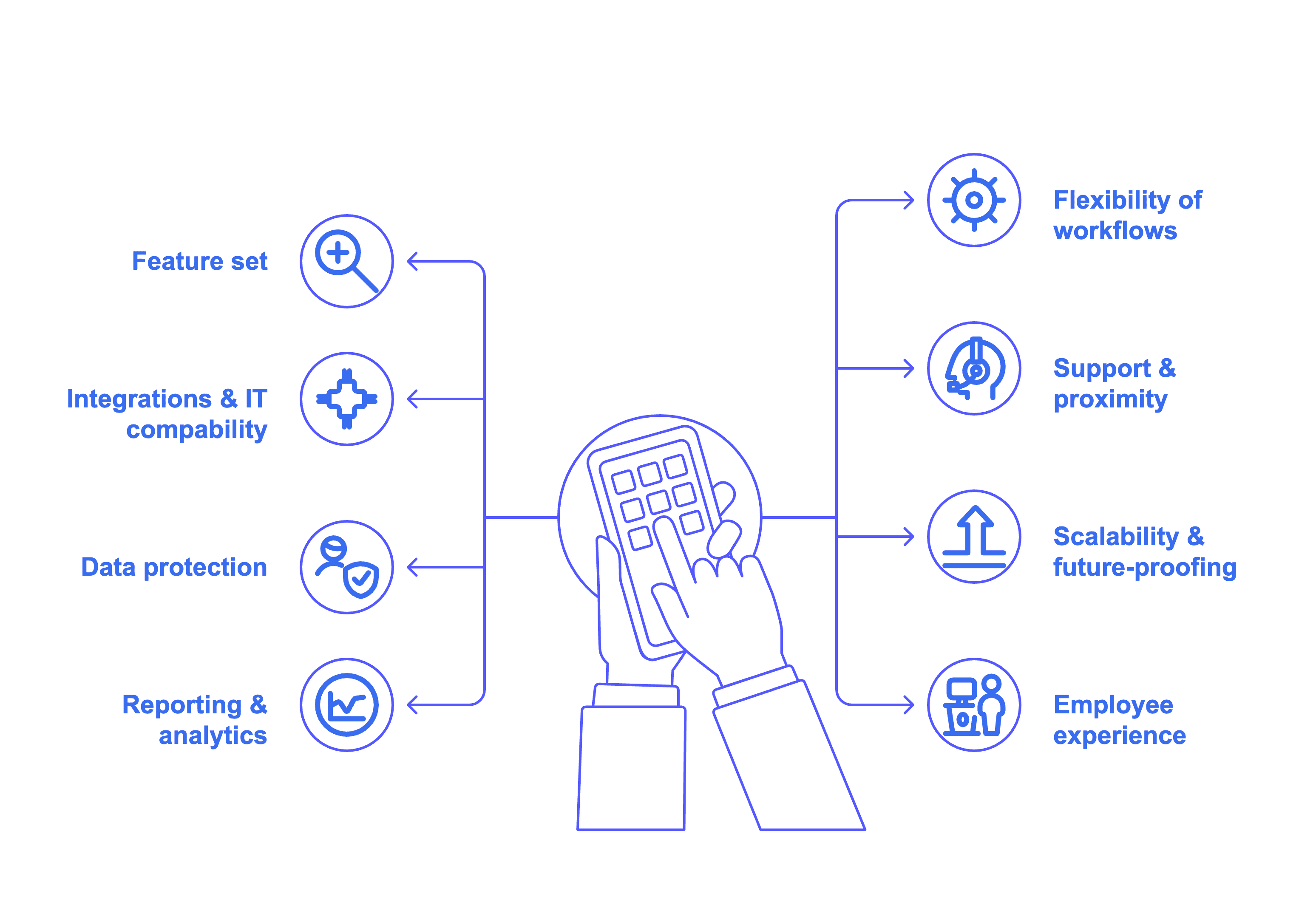
Integrations & IT compatibility:
Does the software support your existing IT landscape (e.g., calendars, SSO, HRIS, smart locks, APIs) and can it be seamlessly integrated? Good integrations ensure smooth operations and high acceptance in daily use.
Support & proximity:
Do you receive personal, timely support in your language and time zone? Local providers often excel with shorter communication paths and better service quality.
Data protection:
Are GDPR and internal compliance requirements fully met? Especially in Europe, the hosting location is a critical factor for security and trust.
Scalability & future-proofing:
Can the solution grow with your business? Make sure that users, locations, or modules can be expanded flexibly without complex adjustments.
Reporting & analytics:
Does the system provide insights into usage, booking behavior, and trends? Data-driven decisions help plan office spaces more efficiently and reduce costs.
Employee experience:
A modern tool should enhance the employee experience—through easy use, mobile bookings, and transparent overview. Optimized desk sharing also helps save resources and energy.
Keeping these criteria in mind allows you to effectively find the software that best matches your needs, data protection requirements, and growth objectives.
The Top 5 Desk Sharing Providers Overview
anny
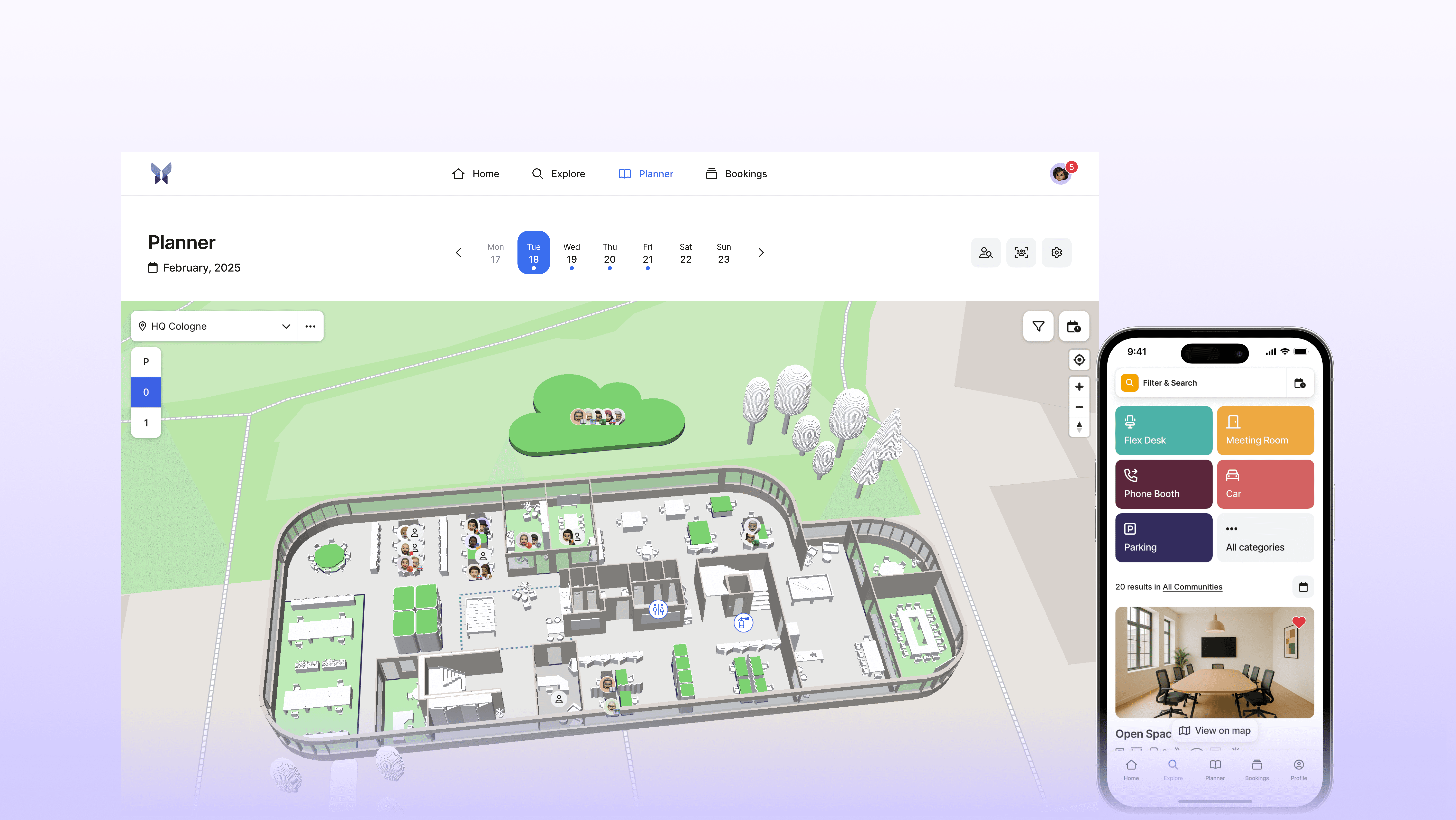
Features:
Intuitive booking of workspaces, rooms, parking spaces, and equipment
Interactive 3D map and mobile app for flexible use
MS Teams App and Outlook Add-In
Utilization analytics, visitor management & community system
Integrations: calendar, SSO, HRIS, smart locks, webhooks, open API
Advantages:
User-friendly and intuitive interface
Wide range of features, also for external bookings
Comprehensive ecosystem with displays & visitor terminals
Personal support from Germany
100% GDPR-compliant, developed & hosted in Germany
Read customer reviews of anny on OMR Reviews and G2.
deskly
Features:
Workspace, meeting room, and parking space reservations via 2D floor plans
Mobile app and MS Teams integration with automatic Outlook/Google calendar synchronization
Booking suggestions, colleague search, anonymous booking, and book-on-behalf
Flexible policy and waiting lists
Role and permission management as well as utilization analytics
Advantages:
Intuitive operation: quick bookings with a few clicks
Deep integration into existing tools (Teams, Outlook/Google Calendar)
Strong compliance: GDPR-compliant and data hosting in Germany
Useful utilization and usage analytics for optimized space use
Find more information about deskly alternatives here.
Envoy
Features:
Workspace, parking, and meeting room booking
Visitor management with pre-registration and check-in processes
Integrations with calendar systems, SSO, and access control
Mobile app for booking and check-in
Advantages:
Comprehensive features for workspace management on a central platform
Powerful features for access control and visitor security
Extensive library of integrations for enterprise tools
User-friendly mobile app
Find more information about Envoy alternatives here.
Robin
Features:
Desk and meeting room reservation
Interactive 2D floor plans
Visitor registration and management
Calendar integration with Google Workspace and Microsoft 365
Advantages:
Clear, intuitive user interface
Detailed utilization data
Visitor management including badge printing
Seamless calendar integrations
Find more information about Robin alternatives here.
Yoffix
Features:
Desk and meeting room reservation
Interactive 2D floor plans
Calendar integration with Google Workspace & Microsoft 365
Workspace analytics & utilization reports
Advantages:
Covers a wide range of resources
Flexible booking and access management
High integration diversity
Transparent and granular analytics
Find more information about Yoffix alternatives here.
Compare more solutions in the extensive Desk Sharing Provider Comparison.
Challenges and Success Factors in Implementing Desk-Sharing Software
The introduction of a Desk Sharing Software is more than just a technical project; it also signifies a cultural shift. For a successful transition, companies should recognize typical challenges and address them proactively.
1. Team Acceptance
The most important success factor is the involvement of employees. Clear communication, training, and a transparent introduction help to reduce reservations and encourage usage.
2. Clear Processes and Rules
Smooth operations require clear booking and usage policies, such as for reservations, cancellations, or no-shows. Good software supports this with automated workflows.
3. Technical Integration
The solution should seamlessly integrate into existing systems like Microsoft 365, Google Workspace, or HR tools. This keeps administrative effort low and acceptance high.
4. Data Protection & Compliance
Especially in Europe, GDPR compliance is a must. Providers with hosting in Germany or the EU build additional trust.
5. Gradual Introduction
A pilot project aids in gaining experience and optimizing processes. With usage data and utilization analyses, workspace strategies can be continuously improved.
Properly executed, desk sharing becomes a strategic component of modern work organization – offering greater flexibility, transparency, and efficiency.
Many providers, including anny, deskly, Envoy, Robin, Yoffix, and LIZ, offer free trials or demos. This makes it easy to determine which solution best suits your company.
💡 Tip:
During tests, pay special attention to user-friendliness, integrations, and team acceptance – because the best system is the one that is truly used in everyday life.
Conclusion: The Right Path to a Modern Workplace
The market for desk-sharing software shows how strongly the working world is shifting towards flexibility and hybrid models. Companies that want to use their office spaces efficiently and offer more freedom to employees cannot avoid modern workplace solutions.
The right software not only assists with the booking of workstations and rooms, but also creates transparency, promotes collaboration, and provides valuable data for strategic decisions. It is crucial that the tool fits with your own processes, data protection requirements, and company culture.
Platforms like anny demonstrate how user-friendliness, data protection, and intelligent features can be integrated into a holistic system. At the same time, it is worthwhile to compare different providers and discover for yourself through trial versions or demos which solution fits best.
Those who want to dive deeper can find further analyses, tips, and market overviews on the future of hybrid workplaces in our Desk-Sharing Software Guide 2025.





" height="38px" id="bH388uk2E" transform="translate(1 1)" width="118.00000395534607px"/></svg>)